Wednesday, September 19, 2012

Piece Of Tradition


Worshipping Lord Ganapati on Ganesh chaturthi ( fourth day in the month of Bhadrapada of the Hindu calendar) and  goddess Gowri, Ganapati’s mother, on trutiya (third day of the month) has been a tradition in our family for decades or probably centuries. Decades I know. Centuries I guess. This involves bringing clay idols of Lord Ganapati and Gowri, setting them up on a suitably decorated platform or ‘Mantap’ as it is called, worshipping them on the specific days according to tradition, preparing tasty dishes (purportedly as offering to the gods), eating them to heart content and at the end of the festivities immersing the idols in a well or a stream.  Since there are hardly any wells or streams around these days, a bucketful of water performs the function of a well. Before the ‘puja’ (religious worship) you invoke the god and request him/her to enter the idol and accept your worship. After the ‘puja’ you invoke a well into your bucket and immerse the idols in it.

Even though Ganesha chaturti is celebrated all over the country and more importantly in all the southern states, my experience is limited to the way it was being done in Bengaluru, and after I shifted to Goa, what I have seen in Goa during the last three decades. Between the two states I find that lot more importance is given to tradition in Goa. There is tradition involved in every aspect of the festival here. You get the idols from the same idol maker every year. The colour, shape, size and trimmings are always the same. The ‘Mantap’, its decorations and the offerings to the deity follow tradition. The priest who comes over to guide the ‘puja’ will always be from a particular family. The number of days that the idol is kept for worship is fixed and so is the place of immersion. One rarely deviates from tradition.

I read a recent news item  which said that one of the families had an old ‘Mantap’ which had reached a stage of collapse after bearing the Lord’s elephantine weight and bearing with the coastal humidity over decades. The family ordered for an exact replica and it was done only after obtaining approval from the ‘Kuladevata’ (family deity) and with the concurrence of the traditional family priest!

As far as the ‘Mantap’ is concerned we too had our tradition and the ‘Mantap’ that hosted the idols in our house at Bengaluru traditionally was an upturned table. We had only one table in our house which was meant to assist our education process and for three days in a year it housed lord Ganapati who is the god in charge of knowledge. I do not know if studying on the table which hosted the lord of knowledge boosted our learning process but the fact that the learning process came to a standstill during those days surely boosted our festival spirit.


This up turned table was very convenient as a ‘Mantap’.  Its four legs jutting out of four corners were ideal for tying plantain saplings, and mango leaves were hung on a string tied across the legs. The drawers made the raised platform and the idols seated in their places for traditional worship with lighted oil lamps by their side were a pretty sight unlike what you see right now in the picture above, incidentally my debut as an artist. (Please resist the urge to reach for the key board for drafting protest letters. And if you must, reach for my artist cousin’s neck if you can. He happens to be the inspiration. Anyway I assure you that I will not do it again.)

After I shifted to Goa and we started celebrating the festival here, I had to give up the tradition of an upturned table as there were no tables around (my learning process had stopped long back and my children’s process was yet to begin) and for a few years we deviated from tradition and housed our Ganapati once on the TV table, once on the book shelf, once on a teapoy and so on. Then our old refrigerator broke and we bought a new one during a Ganesh Chaturti discount sale. This one had its own legs to stand up on and our old wooden fridge stand was rendered redundant. During ‘Chaturthi’ that year we placed two wooden planks on top of this stand and from the humble position of a fridge stand its journey towards the exalted position of Ganapati’s  ‘Mantap’ began.


It served the lord in its original shape for few years and during the construction of our present house I got a marble slab cut to size and used it as the top instead of the rotting planks and the fridge stand really started looking like something made for the purpose.


Another year my son got inspired by the decoration of the ‘Mantap’ in his friend’s place and decorated our ‘Mantap’ too with shiny golden paper and hit two nails at the corners for tying a string for the purpose of hanging auspicious mango leaves. With these trimmings it turned out to be a fully developed Ganapati  ‘Mantap’. It has served for more than a decade now and has become the traditional ‘Mantap’ of our household.

I am sure that my improvised ‘Mantap’ will surely last longer than me and few more decades down the line those who are around will have no knowledge of its humble origin. It will only be known as the Ganapati ‘Mantap’ always being used for placing the idols for worship during the Ganesh Chaturti festival.


Another piece of tradition is born.

Sunday, September 16, 2012

Shielding Fish From Rain!


Ever heard of someone holding an umbrella over fish to shield it from rain?                                                                      

Well, that is what exactly one of my friends did last night!

We were at a party in a farm near Ponda, (incidentally a fresh water fish farm but no true Goan would touch a fresh water fish with a barge pole, leave alone holding an umbrella over it to protect it from rain.) and some of my friends were frying fish (King fish, fresh from the Arabian sea) in the open. It rained, there was only one umbrella, and it was used to shield the fish being fried while the group of onlookers hovering around, offering useful suggestions, eagerly anticipating the outcome, got wet.

For a Goan fish is priority and a king fish, as its name suggests, deserves royal treatment.

Friday, August 31, 2012

The New Cricket Hero and His BA.


Unmukt Chand, is the captain of the India under 19 cricket team (this information is for those who are worse than me in keeping up to date with cricket). His team managed to beat Australia and lift the world cup - under 19. Great and congratulations. The whole team is assured of a great future in cricket, fantastic sale prices in IPL, endorsement  offers by  ‘Youngistan’ Pepsi and what not. Very good.  Let them enjoy. They deserve it.

Now, what concerns me is the hue and cry (lead by our media) regarding the captain of the team being denied a chance to appear for and clear his BA exam. I appreciate the college authorities who stuck to rules and refused permission to appear for exams. Chand was playing cricket, no time for attending classes, lack of attendance (less than 33%), and so can't take exams. Right. What irks me is the apologetic utterances by the VC of Delhi university (I don’t know his name) and the Minister for human resources (Kapil Sibal) and their determination to set things right.

I do not understand what is there to set right? Unmukt Chand could have given up cricket and remained in his class like we fools and could have got his BA, BDS or whatever. He was good in Cricket, selected cricket and assured himself of a great career. Fine. But if he wants his BA, he should attend classes, study for exams and pass. That should be the stand of the University. If the university wants a share of  Chand’s glory it can offer him a Hon. Phd. and the minister can recommend him for 'Padmashri', both of which are available to all our cine actors, politicians and other popular folks. 

The university and the government should try to save what little credibility our  university degrees still have. Let we mortals have our degrees and the cricketers their glory.

The VC and minister are not trying to set things right, they are trying to set things wrong. 

Wednesday, August 15, 2012

Tamdi Surla - Water Falls

I have written about the first outing of 'The early birds of Ponda pool' (EBOPP) for short, to Dudh sagar falls, a trek of approximately 25 kms up and down some time earlier in this blog. I had also mentioned about the next two outings to Molem and Bondla where the focus was on restoring the energy lost during the first trek by consumption of lots of  fluids stored in different couloured bottles to go with other unfortunate leggy birds and legless swimmers of this universe. Now, having convinced themselves that they are sufficiantly restored, the EBOPP decided that they are in a condition to embark up on the next trek where focus will once again be on the use of their own legs and zeroed up on a visit to a waterfall near Tmbdi surla, a village in Sanguem taluka, South Goa, on the 15th Aug 2012.


Tambi Surla is at a distance of 38 kms from Ponda and is well known for the twelth century Shiva temple, supposed to be the oldest temple in Goa. It is Lord Mahadev's holiday home.


The trek begins single file after paying respects to the reigning deity of the place.


Surmounting the obstacles or tamely going under as it suits each individual


 Crossing  a dozen cool, pleasant, clear water streams in the path


 Keeping in mind that there are other occupants of the place who need to be treated with respect and regard, this one possibly a pit viper, located by one of the sharp eyed in the group,( lucky it did not cross my path, either pit viper would have ceased to exist or Raghunandan. More likely Raghunandan)


getting a first look of the falls from a distance, egging us to move faster


 we are there after an hour and fifteen minutes.


And immediately the swimmers  freak out and enjoy an exhilerating shower


A sedate walk back after an eco friendly trek (note the carry bag carrying tetra packs and other trash)


and after a relaxing swim in tamer waters near the temple, the swimmers return to their daily grind once again.


Thursday, August 9, 2012

The Reis Magos Fort


Once in a way our family manages to shrug off the built in lethargy and gets out to spend an evening together. Last Wednesday was one such day and the shrugging off of lethargy was aided to a great extent by my wife’s statement/threat that whoever stays back home in the evening will cut the vegetables for curry, mix the dough for chapattis and make other arrangements for preparation of dinner.

We unanimously decided to spend the evening out and were trying to find a place worth visiting when the name Reis Magos Fort sprang up. I had read recently in the news paper that the old fort which was being used as a prison and later was allowed to rot had been restored and spruced up. We did not know if it would be worth going there and since the location map showed it to be on the opposite bank of river Mandovi, close to Panaji, we felt that we could take a chance. A drive along the river Mandovi is always welcome.

We managed to start at half past four and reached the fort at half past five wondering what the timings would be. The new board in front of the fort said that we need not wonder for long and showed the timings 9.30 AM  -  5.30 PM,  and the lock on the gate indicated very clearly that the timing was being strictly followed.


I felt bad for having missed it and we walked to the ‘Three Kings church’ just next to the fort and spent some time admiring the view of river Mandovi from the church.


The gate to enter the fort was closed but there was nothing to prevent me from walking around the fort and while doing so, at one point I found some stairs going half way up the fort.


I climbed up and sat there enjoying the cool breeze when my sight fell on a half open door next to the landing.  I tentatively stepped in to appease my curiosity and found that it opened onto a large terrace from which there was a good view of the fort itself


and another flight of stairs that lead to the top. We had made a back door entry into the fort!


The small museum at the top was closed but we were rewarded by the wonderful view of the Mandovi   estuary and the Cabo Raj Nivas - the Goa governor’s residence. The governor stays at the tip of the land mass you see projecting into the river at a distance, in a beautiful bungalow overlooking the Murmugao port and the arabian sea. Lucky governor!


We climbed down, spent some pleasant time on the terrace where one of my sons got himself occupied exploring the prison cells which now contained paintings of old time Goa and the other  was happy just roaming around  talking on his mobile phone.


My wife's observation and objection always is that we are together just as long as we are in the car and not a minute later. We decided to make an attempt to dispel the thought and managed to sit together a minute for a family photo.


It was getting dark by then and we started back thanking our luck for providing us an entry into the fort and on reaching the door, found it closed and bolted but fortunately not locked.


We offered our thanks to the carpenter who had fitted the padlock in a way that cannot be locked and attempted to open the rusty bolt. It screeched aloud and protested our furious attempts but gave up after five minutes. Even after releasing the bolt it was not easy to push the door open and the use of my children’s might only made it groan and brought down flakes of mud from the roof. We hastily moved back, thought of shouting for help and decided to do so after another attempt. With some gentle but firm persuasion my children managed to open the door keeping the fort intact. We thanked our luck once again for not locking us inside and returned home with a nice feeling and a set of  pictures to keep the memory of a pleasant evening alive for a long time. 

Sunday, July 22, 2012

Job Satisfaction


James Alfred Wight’s (James Herriot) animal stories,  named “All things bright and beautiful” “All things wise and wonderful”  “All creatures great and small” and “The lord god made them all” are one of my all time favourites. Even though they are known as animal stories, they are more about the owners of the animals and other human characters that the author came in contact with and are endearingly written about.  The stories in
general give a beautiful picture of life in early 20th century in Yorkshire, always making me feel “oh, I should have been there, then”.

There is a vast difference between his time, society and patients and those of mine but I come across many things that I can relate to his work as a person providing and living on providing health care. A few decades into the profession, many a times he mentions about the new techniques, materials and medicines available to him, which were not there when he began his work and wonders about the huge difference that they made to his life as a veterinarian.

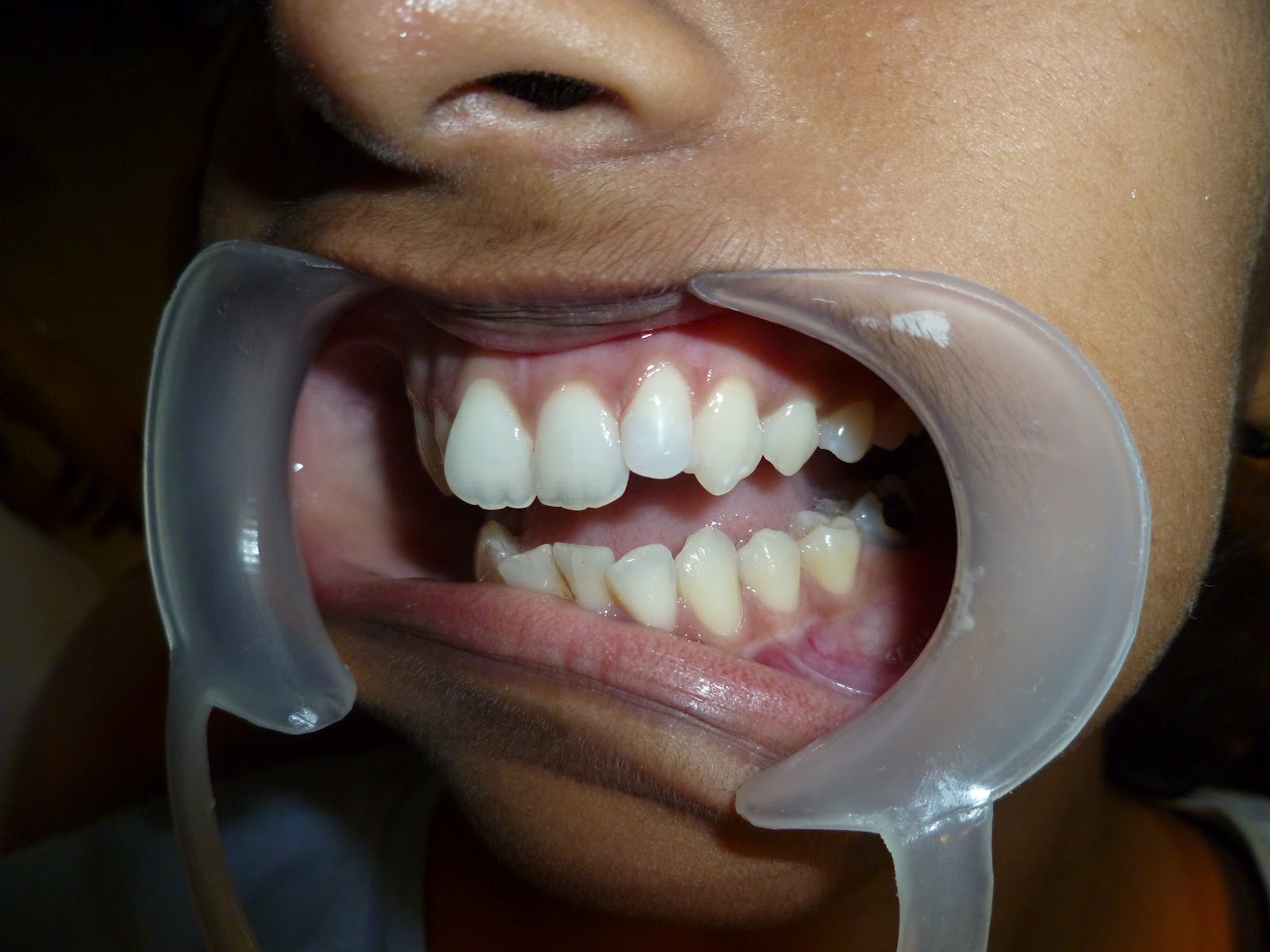
Thirty years after beginning work, I can count a few such things in my life as a dentist, one of which is the availability of the composite resin or the light cured acrylic for dental fillings which I had never heard when I began my work.

The broken tooth in the picture would have required placement of a crown or ‘cap’ involving considerable amount of work spread over a few days and the support of a very good lab technician to get the result which I managed to obtain in an hour by rebuilding the broken part over the stump using the composite material.


Fee received - Not worth mentioning.

Job satisfaction - priceless.

Sunday, July 15, 2012

Mysore Zoo And The Slide


During my school days Mysore was our permanent holiday destination and a trip to Mysore was never complete without a visit to the Zoo. Even though we continued to visit Mysore at least once a year, visits to the Zoo were less frequent after I crossed primary school. It once again appeared on the ‘must do’ list when my children were young. I had not been to the Zoo after my children grew up (may be last fifteen years).

I went there last week during my recent visit to Mysore and was happy to find many changes for the better. Better enclosures for the animals and better toilets for the visitors to name just two of the most important. Also, I noticed that two things have remained unchanged.  One was the behavior of the animals and visitors - animals behaving as gentlemanly as they used to be and the visitors behaving like animals shouting and gesticulating in front of the enclosures.

The other was this slide.


 I had completely forgotten about it till I saw it next to the aviary. It stood as it did decades ago, the very sight now bringing a flood of child hood memories. It is the tallest and the smoothest slide that I have ever slid down and I remember that we used to immensely enjoy the slides. We used to slide on our bottoms, stomachs and backs and return home happy with sand and mud in our hair and pockets. I had an urge to climb up and slide down at least once but better sense prevailed and I just stood there happy with my memories and seeing children enjoying themselves.

It has been there for more than four decades and I don’t think that it has required any repairs or resurfacing. I hope it stays so forever, a source of pleasure for the young and an object bringing back pleasurable memories for the old.